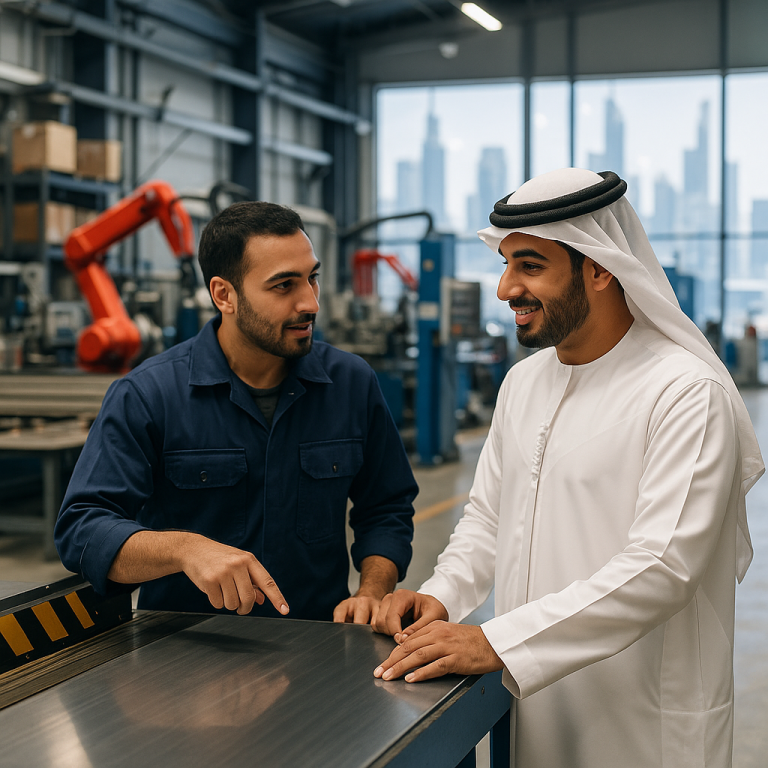
High ROI Manufacturing Business: Busy Sectors with Loyal Customers
Starting from scratch in Dubai is risky and slow. Many entrepreneurs face long waiting times for permits, building a customer base, and navigating local regulations. Meanwhile, buying an existing manufacturing business means acquiring not just assets, but also an established cash flow and loyal customers. This approach can fast-track your startup growth, especially in the GCC market where demand for quality manufacturing is rising. However, understanding which manufacturing sectors remain busiest and most profitable is crucial before making an investment decision.
Why Buying a Business in Dubai/UAE Makes Sense
The UAE, particularly Dubai, offers an unmatched environment for business acquisition. With a rapidly growing population exceeding 10 million and a booming tourism sector that attracted over 16 million visitors in 2023, demand for manufactured goods remains consistently high. From packaging to construction materials, daily-consumption products fuel a steady market.
Moreover, the UAE’s business-friendly policies, such as zero corporate tax in many free zones and simplified company formation procedures, reduce operational overheads and legal complexities. This, combined with strategic location advantages connecting GCC investors to global markets, makes buying a manufacturing business in Dubai a logical choice. According to recent studies, the manufacturing sector in the UAE grew by 5.6% in 2023, reflecting robust startup growth potential for new owners.
How Business Buying/Selling Actually Works Today
Today’s business acquisition process is streamlined by technology and transparency. Online marketplaces allow you to browse vetted manufacturing businesses with detailed financial records and performance data. These platforms often include data rooms where you can securely review sensitive documents like profit and loss statements, supplier contracts, and customer lists.
Valuation tools have evolved, enabling buyers to estimate business worth based on revenue multiples, EBITDA, and market trends. Meanwhile, due diligence platforms help verify legal compliance, intellectual property rights, and operational risks. These resources reduce guesswork and empower buyers to make informed decisions. However, despite these tools, many buyers underestimate the complexity of customer and staff transfer processes, which are critical for maintaining business continuity.
As experts in this field, we emphasize that buying a manufacturing business is not just a transaction—it’s a strategic move requiring deep market insight, operational expertise, and careful planning to safeguard your investment.
The Real Steps of a Purchase
Step 1: Finding the Right Business
Begin by identifying manufacturing businesses with high ROI potential and loyal customer bases. Use trusted marketplaces or brokerages specializing in GCC investments.
Step 2: Initial Evaluation
Review financials and operational reports to shortlist businesses matching your criteria and risk tolerance.
Step 3: Due Diligence
This is where most buyers face challenges. Conducting thorough due diligence means verifying all data, assessing customer loyalty, and understanding staff roles. Many fail here by overlooking cultural and operational nuances that affect business transfer success.
Step 4: Negotiation and Agreement
Agree on terms, including price, payment structure, and post-sale support.
Step 5: Legal Transfer and Closing
Complete ownership transfer legally while ensuring smooth handover of customer contracts and staff to maintain business momentum.
Enter your email or WhatsApp to receive it instantly.
Common Mistakes and Risks
- Insufficient Due Diligence: Overlooking operational, legal, or financial red flags.
- Ignoring Customer Retention: Losing loyal customers during transition.
- Failing to Transfer Staff Effectively: Staff turnover can disrupt production and service quality.
- Overpaying Based on Surface Metrics: Valuing a business solely on revenue without profitability analysis.
- Neglecting Market Trends: Investing in declining manufacturing niches.
- Poor Integration Planning: Lack of strategy for post-sale business operations.
- Underestimating Regulatory Compliance: Missing licenses or violating local laws can lead to fines or shutdowns.
These risks highlight why expert guidance is essential to avoid costly mistakes and protect your investment.
👉 See our vetted ready businesses for sale
👉 Book a confidential call for passive investment opportunities
The Role of a Partner (The Bridge)
We fill the gaps most buyers encounter by identifying real manufacturing businesses with proven cash flow and loyal customers. Our team conducts comprehensive due diligence, focusing on operational sustainability and customer/staff transfer processes. Whether you’re a buyer eager to actively run the business or a passive investor seeking high ROI manufacturing opportunities in the GCC, we tailor solutions to fit your goals.
Our expertise ensures a smooth acquisition journey, minimizing risks and maximizing startup growth potential. Confidential conversations and vetted opportunities are available exclusively for qualified investors.
👉 See our vetted ready businesses for sale
👉 Book a confidential call for passive investment opportunities
Buying a manufacturing business in Dubai or the wider UAE market is a strategic move that can yield significant returns when done right. The combination of a bustling economy, business-friendly environment, and advanced acquisition tools creates fertile ground for investors and entrepreneurs alike.
👉 See our vetted ready businesses for sale
👉 Book a confidential call for passive investment opportunities
Contact Persian Horizon for expert investment guidance.