Introduction
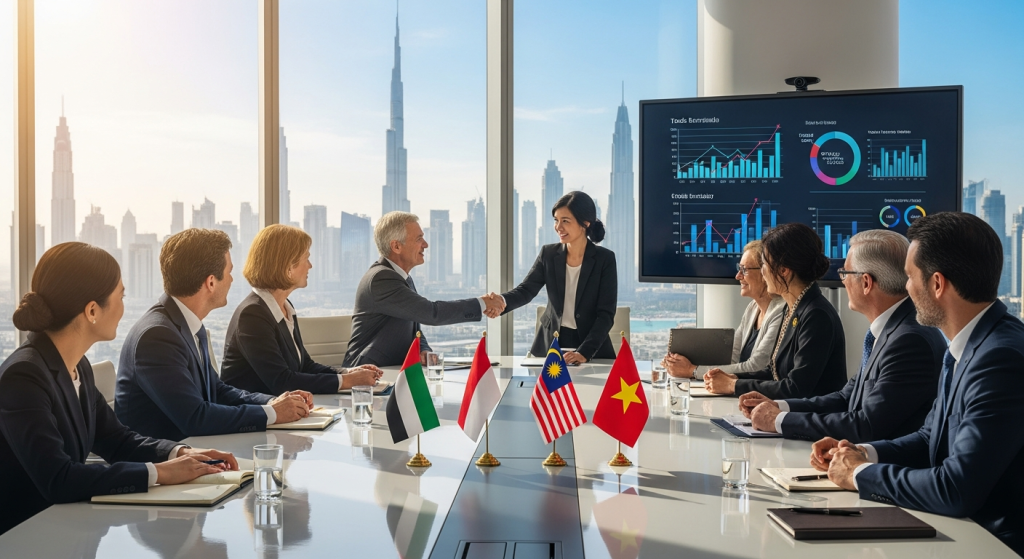
The United Arab Emirates (UAE) is taking significant steps to enhance its trade relationships with Southeast Asia, aiming to diversify its economic partnerships and boost its global trade footprint. As the UAE continues to position itself as a global business hub, the focus on Southeast Asian markets represents a strategic move to tap into the region’s burgeoning economies and consumer markets.
Current Trade Landscape
As of 2023, the UAE’s trade with Southeast Asia has shown promising growth. Countries like Indonesia, Malaysia, and Vietnam are emerging as key partners, with trade volumes increasing significantly over the past few years. The UAE’s strategic location, robust infrastructure, and business-friendly environment make it an attractive partner for Southeast Asian nations looking to expand their reach into the Middle East and beyond.
Key Trade Figures
According to recent reports, the UAE’s non-oil trade with Southeast Asia reached AED 80 billion in 2022, marking a 15% increase from the previous year. The main exports from the UAE to this region include machinery, electronics, and petrochemicals, while imports consist of agricultural products, textiles, and consumer goods.
Strategic Partnerships and Agreements
In 2023, the UAE government has initiated several trade agreements aimed at enhancing economic cooperation with Southeast Asian countries. These agreements are designed to reduce tariffs, facilitate easier market access, and promote investment opportunities.
Free Trade Agreements
One of the most notable developments is the ongoing negotiations for a Free Trade Agreement (FTA) between the UAE and the Association of Southeast Asian Nations (ASEAN). This FTA is expected to eliminate tariffs on a wide range of goods and services, fostering greater trade flows between the regions.
Investment Opportunities
The UAE is also actively encouraging investments from Southeast Asian countries. Initiatives such as the Dubai Investment Development Agency (Dubai FDI) have been promoting the UAE as a prime destination for foreign direct investment (FDI). The UAE offers various incentives, including tax exemptions and 100% foreign ownership in certain sectors, making it an attractive option for Southeast Asian investors.
Sectoral Focus
Several sectors are poised for growth as a result of these new trade partnerships. Key areas of focus include:
1. Technology and Innovation
The tech sector is rapidly evolving in both the UAE and Southeast Asia. Collaborative efforts in technology transfer, innovation, and research and development are expected to flourish. The UAE’s investment in tech startups and digital infrastructure complements the growing tech ecosystem in Southeast Asia.
2. Tourism and Hospitality
Tourism is another critical area of focus. The UAE aims to attract more Southeast Asian tourists by promoting its diverse offerings, from luxury shopping to cultural experiences. Joint marketing campaigns and travel packages are being developed to enhance tourism flows between the regions.
3. Renewable Energy
As both regions prioritize sustainability, partnerships in renewable energy projects are gaining traction. The UAE’s experience in solar energy can provide valuable insights and technology to Southeast Asian countries looking to develop their renewable energy capabilities.
Challenges and Considerations
While the prospects for expanding trade with Southeast Asia are promising, several challenges must be addressed. These include:
1. Regulatory Hurdles
Different regulatory environments can pose challenges for businesses looking to enter new markets. The UAE and Southeast Asian countries must work together to streamline regulations and simplify the process for businesses.
2. Cultural Differences
Understanding cultural nuances is crucial for successful business interactions. Companies must invest in cultural training and awareness to navigate the diverse business landscapes in Southeast Asia.
3. Logistics and Supply Chain
Efficient logistics and supply chain management are essential for facilitating trade. The UAE’s advanced logistics infrastructure can play a pivotal role in ensuring smooth trade operations with Southeast Asia.
Conclusion
The UAE’s focus on expanding trade partnerships with Southeast Asia represents a strategic move to diversify its economic ties and tap into the growth potential of the region. By leveraging its strengths and addressing challenges, the UAE can position itself as a key player in Southeast Asia’s economic landscape. As these partnerships develop, businesses in both regions stand to benefit from increased trade opportunities, investment prospects, and collaborative ventures.
For more information on investment opportunities and business setup in the UAE, visit Persian Horizon.
Source: https://www.emirates247.com/business